
For enthusiasts and daily drivers alike, the roar of a performance exhaust is often synonymous with the joy of driving. However, as urban environments become more densely populated and noise sensitivity grows, automotive exhaust noise regulation trends have shifted from a minor administrative inconvenience to a central pillar of vehicle compliance. Whether you are upgrading your system for better airflow or maintaining an aging platform, navigating the legal landscape of sound output is more critical than ever. The increasing impact of noise pollution laws on aftermarket exhaust systems has forced manufacturers and car owners to prioritize precision engineering over raw decibel levels.
In this guide, we will break down the evolving standards for exhaust acoustics, the technology behind modern compliance, and how you can ensure your vehicle stays street-legal without sacrificing the performance you crave. From understanding decibel monitoring protocols to decoding international standards, you will gain the clarity needed to modify your vehicle responsibly in an era of tightening environmental and noise-related oversight.
1. Navigating Current Automotive Exhaust Noise Regulation Trends and Legal Standards

1.1 The Multi-Layered Framework of Vehicle Sound Laws
Understanding automotive exhaust noise regulation trends requires looking past a single set of rules. Instead, vehicle sound compliance operates within a complex, multi-layered hierarchy that changes significantly depending on where you drive. Navigating these requirements is essential for enthusiasts who want to modify their exhaust systems without risking recurring legal headaches.
1.1.1 Federal EPA involvement versus state statutes
While the federal Environmental Protection Agency (EPA) primarily dictates noise standards for newly manufactured vehicles—often focusing on long-term durability and emissions—the day-to-day enforcement of exhaust noise falls largely on individual states. States like California operate under stringent codes that often exceed federal guidelines, creating a bifurcated landscape where a part legal in one jurisdiction may be strictly prohibited in another.
1.1.2 The prevalence of local municipal sound ordinances
Beyond state law, local municipal ordinances are increasingly becoming the front line of noise control. Many urban centers have implemented specific noise bylaws that target "excessive or unusual" exhaust noise, regardless of whether a vehicle passes state-level inspection. These local rules often empower law enforcement to cite drivers based on subjective criteria or proximity to noise-sensitive zones, such as residential areas or hospitals.
1.1.3 Decoding decibel limits and A-weighted sound pressure (dBA)
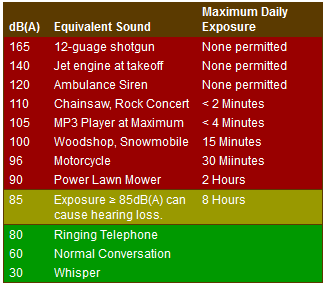
When authorities measure noise, they rely on A-weighted decibels (dBA). This scale is designed to mimic the sensitivity of the human ear, focusing on the frequencies that we find most disruptive. Compliance often hinges on staying below specific dBA thresholds set at defined engine RPMs. If your system exceeds these limits, you face the direct impact of noise pollution laws on aftermarket exhaust systems, which are increasingly being drafted to penalize any modification that alters the factory-certified acoustic signature of a vehicle.
1.2 Modern Measurement Methodologies and Testing Protocols
Compliance is not just about what your car sounds like to the driver; it is about how it registers on a calibrated instrument. Enforcement agencies have shifted toward standardized testing to remove ambiguity from the citation process.
1.2.1 Stationary sound testing procedures
Stationary testing is the most common method for roadside enforcement. An officer will position a decibel meter at a specific distance and angle from the exhaust outlet while the engine is held at a pre-determined RPM, usually corresponding to a percentage of the engine's peak power output. To prepare for these checks, enthusiasts can reference JASMA exhaust sound level legal limits and certification guide to understand how professional-grade testing validates acoustic performance.
1.2.2 Drive-by testing and track-side enforcement standards
Drive-by testing, or pass-by noise testing, is more comprehensive, simulating real-world driving conditions. While rare in typical traffic stops, this is standard procedure at sanctioned racetracks and vehicle inspection facilities. These tests measure the total acoustic output as the vehicle accelerates past a microphone, accounting for both intake and exhaust noise.
1.2.3 Calibration requirements for law enforcement decibel meters
For a noise citation to hold up in court, the equipment used must be properly calibrated. Law enforcement agencies are required to use Class 1 or Class 2 sound level meters that are certified annually. If a citation is issued, requesting the calibration logs for the device can sometimes be a critical step in contesting a violation, as any lapse in certification renders the measurement invalid.
1.3 Compliance for Aftermarket Modifications
Balancing high-performance engineering with legal necessity is the primary challenge for aftermarket manufacturers and vehicle owners alike.
1.3.1 Distinguishing between performance gains and noise output
A common misconception is that a louder exhaust equates to higher performance. In reality, modern exhaust tuning is more about managing pressure waves and harmonic resonance. Proper design focuses on scavenging efficiency rather than sheer volume. By prioritizing flow dynamics, builders can achieve significant power increases without resorting to designs that trigger noise violation alerts.
1.3.2 EPA-compliant and CARB-approved certification requirements
In the United States, aftermarket parts must navigate a certification process to remain street-legal. For many enthusiasts, look for components that carry CARB (California Air Resources Board) Executive Orders, which certify that the part does not increase emissions or violate noise regulations. This level of documentation is the gold standard for avoiding compliance issues during routine inspections.
1.3.3 The impact of catalytic converters and emission-linked sound dampening
The catalytic converter plays a dual role: it is essential for emissions control and acts as a significant sound muffler. Removing or "gutting" a catalytic converter is a violation of federal law and almost always results in a significant, illegal spike in exhaust noise. Maintaining a high-quality catalytic converter, combined with a properly tuned resonator, ensures that the vehicle remains both environmentally compliant and within legal decibel limits.
2. Enforcement Trends and Best Practices for Exhaust Compliance
2.1 Emerging Technologies in Noise Pollution Control
The landscape of vehicle enforcement is shifting rapidly as municipalities look for ways to manage urban noise pollution. One of the most significant advancements is the deployment of automated noise camera infrastructure. These systems integrate high-definition directional microphones with camera arrays to pinpoint vehicles exceeding local decibel thresholds in real-time. Unlike traditional traffic stops, these systems provide objective, data-driven evidence that can trigger automated citations or alerts for law enforcement to intervene.
Smart city sensors represent the next frontier in compliance. These networked devices are often installed in tunnels, near residential zones, and in high-traffic corridors to log decibel violations continuously. When a vehicle passes above the established limit, the system captures the license plate and creates a timestamped record of the acoustic event. As the automotive industry shifts toward electric vehicle (EV) adoption, the relative silence of EVs is creating a lower baseline for ambient city noise. Consequently, officials are increasingly focusing on the impact of noise pollution laws on aftermarket exhaust systems, as modified combustion engines stand out more sharply against the quieter urban environment, leading to stricter enforcement protocols for enthusiast vehicles.
2.2 Strategies for Responsible Exhaust System Management
Staying compliant does not necessarily mean sacrificing vehicle performance. The key lies in selecting high-quality components designed for frequency control. When choosing mufflers and resonators, look for systems engineered to cancel out harsh drone-inducing frequencies while maintaining efficient flow. High-quality resonators act as tuned mass dampers for sound waves, smoothing out the exhaust note without creating the excessive backpressure that chokes power.
Physical installation plays a massive role in noise output. Poorly secured piping often causes metal-on-metal vibrations or resonance that contributes to a "rattly" sound profile, which often attracts unwanted scrutiny from authorities. Proper mounting, using reinforced rubber hangers and correct thermal isolation, ensures the exhaust system remains quiet and stable during acceleration. For those who want to be certain of their compliance, utilizing professional-grade decibel meters allows for proactive self-testing in a controlled environment. By conducting a stationary test, you can identify if your setup stays within the legal limits before you face an on-road inspection. To ensure your hardware meets high standards of durability and performance, refer to our guide on JASMA exhaust system durability testing standards to understand how top-tier manufacturers test for long-term acoustic consistency.
2.3 Managing Citations and Inspection Hurdles
Receiving a noise-related citation often leads to a mandatory inspection, commonly referred to as a fix-it ticket. Navigating this process requires organized documentation. If your exhaust is aftermarket, keeping copies of your purchase receipts, proof of compliance with local decibel standards, and any relevant certification documentation is vital. Presenting these documents at a state-approved inspection station can often expedite the clearing process.
Preventative awareness is your best tool for avoiding these citations in the first place. Law enforcement is trained to look for common indicators of non-compliance, such as excessive soot accumulation, visibly modified or missing catalytic converters, and oversized, hollow-sounding exhaust tips. By maintaining a clean, professional-looking setup and avoiding aggressive throttle behavior in restricted zones, you significantly reduce the likelihood of being pulled over. Remember that the goal of modern enforcement is usually the reduction of "excessive" or "disturbing" noise, rather than the complete prohibition of performance upgrades. Keeping your system well-maintained and within reasonable acoustic limits is the best strategy for enjoying modified driving while remaining in the good graces of the law.
As automotive exhaust noise regulation trends continue to evolve, the gap between enthusiast-driven customization and public policy is narrowing. Navigating this landscape requires more than just a passion for performance; it demands a commitment to understanding the legal frameworks that govern decibel outputs and emission standards. By staying informed on the impact of noise pollution laws on aftermarket exhaust systems, you ensure that your vehicle remains compliant while preserving the character and performance you desire. Whether it is adhering to established certification protocols or adapting to the rise of automated noise-monitoring infrastructure, proactive compliance is the most effective way to protect your investment and avoid unnecessary citations.
Ultimately, the future of the internal combustion engine depends on the automotive community’s ability to balance auditory enjoyment with environmental responsibility. Prioritizing high-quality, engineered exhaust components that meet rigorous sound and emission standards allows enthusiasts to continue enjoying their vehicles in an increasingly regulated world. If you are looking to refine your setup, remember that thoughtful tuning and professional installation are your best allies in achieving a compliant, balanced, and high-performing exhaust system. Stay proactive, respect local ordinances, and continue to enjoy the road responsibly.