
When upgrading your vehicle’s exhaust system, the difference between a generic replacement and a performance-oriented upgrade often lies hidden inside the muffler casing. The high-flow muffler internal design is the single most critical factor in determining how efficiently your engine exhales, impacting everything from throttle response and torque curves to the signature exhaust note. While many enthusiasts focus solely on pipe diameter, true performance gains are achieved by optimizing the internal geometry to manage gas velocity and pressure drops without triggering unwanted acoustic resonance.
In this guide, we break down the engineering behind these systems, moving beyond marketing jargon to explore how internal architecture influences engine efficiency. You will learn how to balance the physics of fluid dynamics with your specific build goals, whether you are tuning a naturally aspirated engine for better scavenging or maximizing flow for a forced induction setup. By understanding how different core configurations manage gas flow, you can make an informed decision that preserves your power band while achieving the perfect sound profile for your vehicle.
1. Engineering Principles Behind High-Flow Muffler Internal Design
Understanding the inner workings of an exhaust system is essential for any enthusiast looking to balance engine efficiency with raw power. The high-flow muffler internal design is the primary gatekeeper for exhaust gases, and its architecture dictates how effectively an engine can “breathe.” By optimizing the path these gases take, you can significantly reduce the work an engine must perform to clear its cylinders.
1.1 Fluid Dynamics and Exhaust Gas Velocity
At its core, a high-performance muffler aims to manage the transition of high-temperature, high-pressure gases from the engine to the atmosphere. This process is governed by the principles of fluid dynamics, where velocity is king. Maintaining high gas velocity ensures that the exhaust pulse remains coherent, preventing the “traffic jam” effect that occurs when backpressure stalls the exit of gases from the combustion chamber.
1.1.1 Reducing Backpressure to Improve Volumetric Efficiency
Backpressure occurs when the muffler’s internal components act as a bottleneck. By minimizing restriction, you directly improve the engine’s volumetric efficiency—the ability of an engine to draw in and expel air. A well-designed muffler allows for a smoother transition, ensuring the piston doesn’t waste energy pushing against a pressurized wall of gas during the exhaust stroke.
1.1.2 The Role of Laminar Versus Turbulent Flow in Pipe Geometry
Engineers strive for laminar flow, where exhaust gases move in parallel, smooth layers. When the internal geometry features sharp bends, abrupt diameter changes, or excessive obstructions, the flow becomes turbulent. Turbulence creates friction, which slows down gas speed and increases heat. Smooth-bore paths are critical for maintaining a steady, high-velocity stream that exits the system as quickly as possible.
1.1.3 Harnessing Exhaust Scavenging Effects for Power Gains
Exhaust scavenging is a phenomenon where the high-speed pulse of one exhaust charge creates a low-pressure area behind it, essentially “pulling” the next charge out of the cylinder. A muffler that maintains this momentum is crucial for maximizing power. For those interested in the technical interplay between these pulses, high-performance manifold scavenging effects explained can provide deeper insights into how this cycle influences torque production.
1.2 Core Architectural Configurations of High-Performance Mufflers
Not all mufflers achieve flow in the same way. The internal layout is typically chosen based on whether the primary goal is total noise suppression or maximum unrestricted throughput.
1.2.1 Straight-Through Absorption Cores and Perforated Path Efficiency
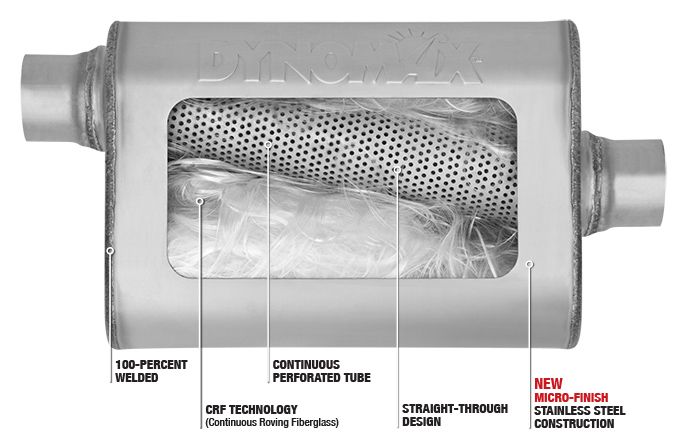
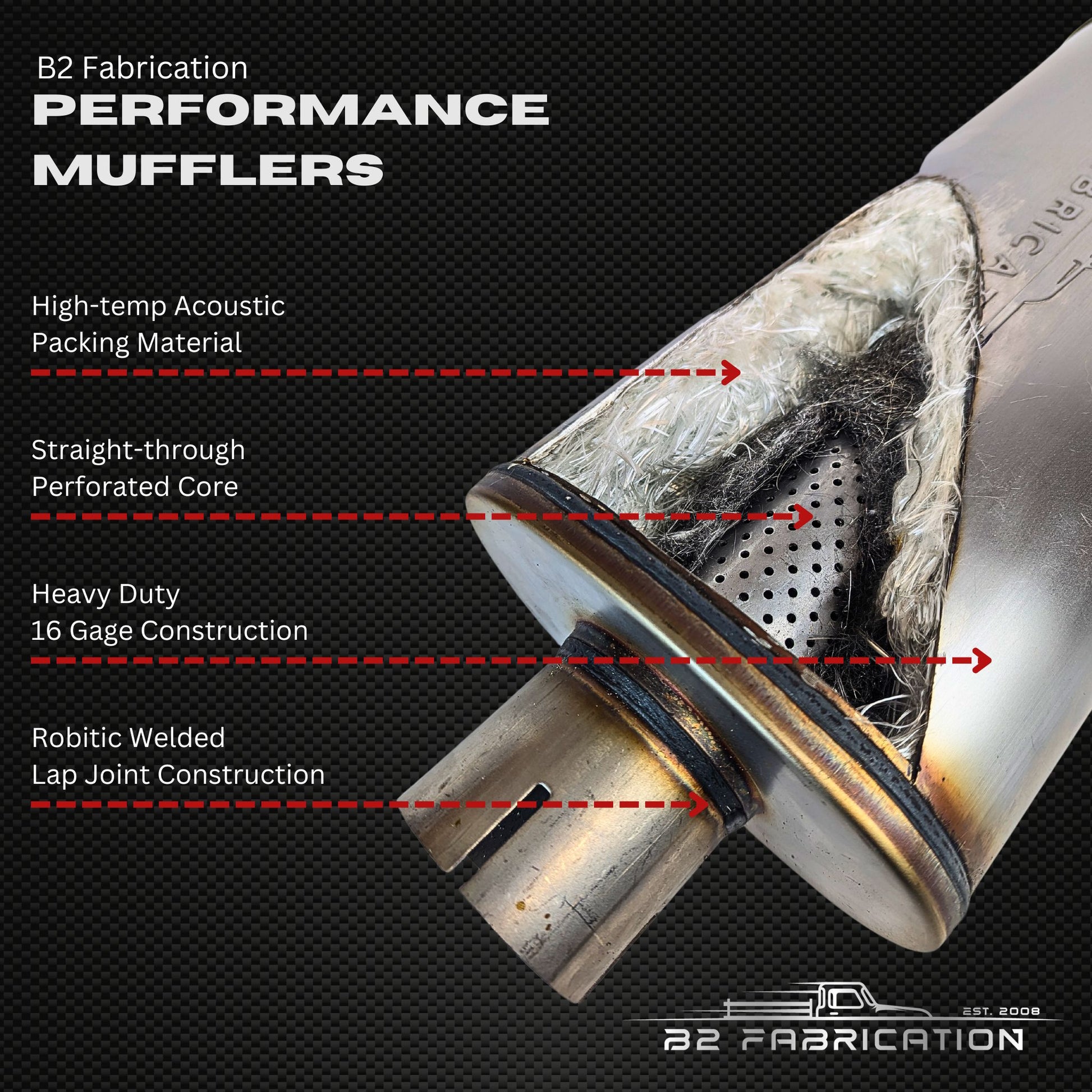
Straight-through designs, often called “glasspacks” or “race mufflers,” feature a perforated core surrounded by sound-absorbing material. Because the exhaust gas follows a direct, linear path, these are the gold standard for flow. The efficiency of this design relies on the perforation pattern, which allows sound waves to enter the packing medium without creating significant turbulence in the main gas stream.
1.2.2 Chambered Design Strategies for Acoustic Cancellation
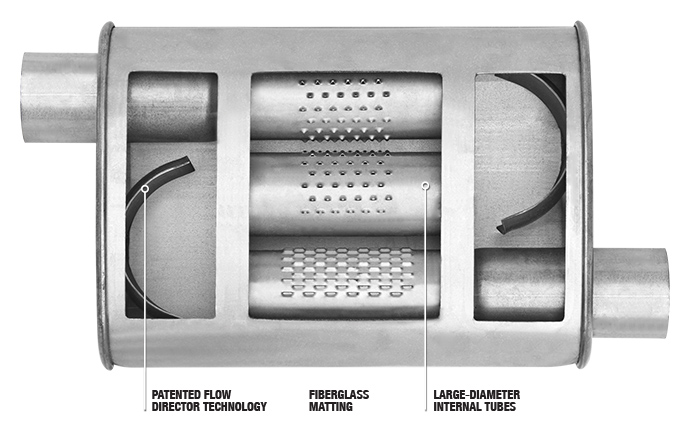
Chambered mufflers use a series of internal baffles to reflect sound waves, causing them to collide and cancel each other out. While these are excellent for reducing drone, they inherently create backpressure. Modern high-flow chambered designs attempt to mitigate this by using carefully calculated chamber volumes and offset internal tubes to manage sound frequencies without forcing the gas to take a tortuous path.
1.2.3 Hybrid Internal Architectures for Dual-Purpose Vehicles
Many modern performance systems utilize hybrid internals. These designs combine a straight-through path for wide-open throttle performance with secondary resonance chambers that only engage at cruising RPMs. This dual-purpose approach provides the flow necessary for racing while keeping the vehicle civilized for daily driving.
1.3 Material Science and Thermal Management
The materials chosen for the muffler internals must withstand extreme heat and vibration while maintaining structural integrity over thousands of miles.
1.3.1 Impact of Perforation Patterns and Louver Angles on Flow Restriction
The shape of the perforations in a core matters more than people realize. Stamped louvers, which create a scoop-like opening, can actually direct sound waves into the packing more effectively than simple drilled holes. However, if the louver angle is too aggressive, it can protrude into the gas stream, causing unnecessary turbulence and flow loss.
1.3.2 Comparative Analysis of Packing Media: Ceramic Fiber vs Stainless Steel Wool
Packing material is the lungs of the muffler. Ceramic fiber is lightweight and offers excellent heat resistance, making it ideal for high-RPM applications where exhaust gas temperatures are extreme. Stainless steel wool is often used as a base layer because it is highly resistant to “blowout,” where the intense pressure pulses gradually shred the packing over time.
1.3.3 Heat Dissipation Properties of Aluminized Steel, Stainless, and Titanium
The casing material dictates how quickly the muffler dissipates heat. Titanium is the premium choice for performance builds due to its high strength-to-weight ratio and ability to handle extreme thermal cycling without degradation. Stainless steel remains the industry standard for durability, while aluminized steel offers a budget-friendly option, though it is more prone to thermal fatigue over extended track use.
2. Selecting and Optimizing Exhaust Systems for Performance Applications
2.1 Matching Muffler Geometry to Engine Specifications
2.1.1 Calculating Optimal Internal Diameter for Displacement and RPM Ranges
Selecting the right internal diameter is a balancing act between flow capacity and gas velocity. A common misconception is that larger is always better; however, excessive diameter leads to a drop in exhaust gas velocity, which can hinder the system’s ability to evacuate cylinders efficiently at lower RPMs. To calculate the ideal size, consider your engine’s displacement and peak power target. For naturally aspirated engines, maintaining high velocity is key to preserving throttle response, while forced induction setups generally benefit from larger diameters to minimize performance exhaust flow dynamics restrictions and reduce backpressure.
2.1.2 Forced Induction Considerations: Why Turbos Require Specific Flow Dynamics
Turbocharged engines operate on a different set of rules because the turbine wheel itself acts as a significant point of flow restriction. In these applications, the goal of a high-flow muffler is to reduce the performance muffler back-end pressure drop as much as possible once the gas exits the turbine. A straight-through, low-restriction design is typically the gold standard here, as it allows the turbo to spool more freely and maintain consistent boost levels across the power band.
2.1.3 Naturally Aspirated Exhaust Tuning and Torque Curve Preservation
For naturally aspirated engines, the exhaust system must facilitate precise exhaust gas scavenging dynamics to maximize volumetric efficiency. The internal geometry of your muffler, when combined with your header and mid-pipe selection, creates pressure waves that help “pull” exhaust gases out of the combustion chamber. If the muffler core is too restrictive or too open, you risk disrupting these waves, which often results in a noticeable loss of low-end torque—an area where street-driven vehicles spend the majority of their time.
2.2 Diagnosing Performance Pitfalls and Acoustic Issues
2.2.1 Identifying and Mitigating Cabin Drone Through Resonance Chamber Design
While maximizing flow is the primary goal for many enthusiasts, the trade-off is often an increase in cabin drone. This occurs when exhaust sound waves resonate at specific frequencies within the cabin structure. High-quality performance mufflers often incorporate specialized resonance chambers or Helmholtz resonators to cancel out these specific drone frequencies without creating an internal blockage that would negatively impact sport muffler acoustic frequency tuning.
2.2.2 The Risks of Excessive Pipe Diameter and Loss of Scavenging Velocity
Oversizing your exhaust pipe diameter is a frequent error in DIY performance builds. Beyond just losing torque, excessive volume can cause the exhaust gases to cool down too rapidly as they expand. Cooler gases are denser and travel slower, which defeats the purpose of an upgraded exhaust. Ensuring the internal diameter stays within a range that maintains a constant, high-velocity flow is essential for long-term engine health and power output.
2.2.3 Long-Term Durability: Preventing Packing Blowout and Internal Erosion
High-flow designs rely on internal packing materials, such as ceramic fiber or stainless steel wool, to dampen sound. Over time, high exhaust temperatures and pulsating pressure waves can lead to packing blowout, where the material disintegrates and is blown out of the tailpipe. This not only increases noise levels but can also lead to internal rattling and erosion of the perforated core, eventually creating a power bottleneck.
2.3 Strategic Selection for Street and Track Use
2.3.1 Balancing Decibel Regulations with Maximum CFM Throughput
Street legality often requires a compromise between total CFM throughput and noise output. When selecting a muffler, look for designs that offer “straight-through” flow but utilize high-density packing media to keep decibel levels within legal limits. This allows you to maintain the flow characteristics necessary for high-performance driving while ensuring you remain compliant with local noise regulations.
2.3.2 Maintenance Protocols for Long-Term High-Flow Efficiency
Regular inspections are vital. Check for signs of soot buildup on the muffler casing, which can indicate internal leaks or localized overheating. Ensure that your hangers are secure and that the exhaust system is properly isolated from the chassis to prevent vibration-induced stress cracks. A well-maintained exhaust system will retain its flow characteristics for years, whereas a neglected one will lose efficiency as internal components fail.
2.3.3 When to Upgrade: Signs of Muffler Restriction and Power Bottlenecks
You should consider an upgrade if you notice a decline in top-end power or if your engine temperatures are running higher than usual despite no changes to your tune. A restricted muffler creates excessive backpressure, which forces heat to remain in the combustion chamber longer. If your current setup is showing signs of internal erosion, or if you have modified your engine for significantly higher power, it is likely time to transition to a higher-flow internal design.
Mastering the high-flow muffler internal design is about more than just swapping out parts for a louder note; it is a calculated balance of fluid physics and acoustic engineering. By prioritizing efficient gas velocity through laminar flow paths and optimized core geometry, you can significantly reduce your performance muffler back-end pressure drop, allowing your engine to breathe more freely and produce more consistent power. Whether you are aiming for peak horsepower in a track build or a street-legal setup that minimizes cabin drone, the key lies in understanding how internal architectures interact with your engine’s specific exhaust gas scavenging dynamics.
As you refine your exhaust system, always remember that components should be chosen with both durability and regulatory compliance in mind. While maximizing flow is the primary goal, consistent performance depends on selecting high-quality materials that resist thermal fatigue and erosion over time. If you are preparing your vehicle for official inspections or looking to ensure your modifications stay within legal thresholds, it is essential to consult verified resources regarding JASMA exhaust noise level standards and certification guidelines. Ultimately, the right muffler design turns your exhaust system into a precision instrument, transforming wasted heat and pressure into the reliable, high-RPM output your engine is truly capable of delivering.