If you are looking to squeeze every bit of performance out of a turbocharged engine, understanding the exhaust system backpressure effect on turbo spool is essential. Many enthusiasts assume that bigger pipes always equal more power, but in the world of forced induction, the relationship between exhaust gas velocity, pressure, and turbine efficiency is far more nuanced. When you modify your vehicle’s exhaust, you are not just changing the sound; you are altering the fundamental physics of how your turbocharger generates boost.
In this guide, we will break down why backpressure is the enemy of rapid boost response and how it directly influences your engine's power delivery. We will explore the critical differences between turbine drive pressure and downstream restrictions, helping you make informed decisions when upgrading your exhaust tract. Whether you are aiming for a responsive street setup or a high-horsepower track machine, learning how to optimize your system for turbo-back exhaust flow characteristics is the key to unlocking your engine’s full potential and ensuring your turbo spools exactly when you need it.

1. Understanding the Exhaust System Backpressure Effect on Turbo Spool
1.1 The Fundamentals of Turbocharger Pressure Differentials
1.1.1 The Role of Pre-Turbine Pressure in Energy Extraction
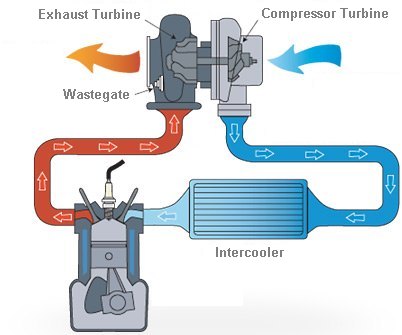
A turbocharger functions as a heat engine that recovers wasted kinetic energy from exhaust gases. To rotate the turbine wheel, the engine must maintain a pressure differential across the turbine housing. This requires significantly higher pressure before the turbine (drive pressure) compared to the pressure after the turbine. As combustion gases exit the exhaust ports, their internal energy—comprised of both pressure and thermal mass—is directed into the turbine housing. This creates the force necessary to spin the compressor wheel. Without sufficient pre-turbine pressure, the turbine cannot overcome the inertia of the rotating assembly, which directly delays the onset of boost.
1.1.2 Distinguishing Between Necessary Turbine Drive Pressure and Restrictive Backpressure
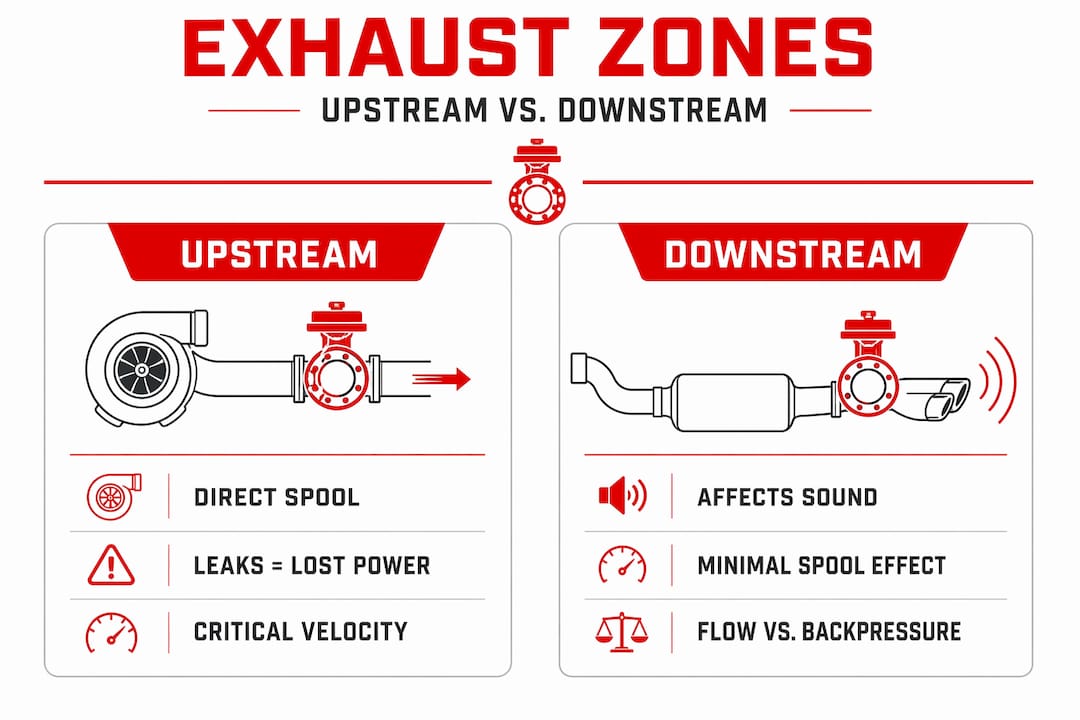
It is vital to distinguish between functional drive pressure and detrimental backpressure. Drive pressure is the intentional "load" placed on the exhaust gas to drive the turbine. Conversely, post-turbine backpressure is the resistance encountered by the exhaust gas as it attempts to exit the system through the downpipe, catalytic converter, and muffler. While the engine needs the pressure drop across the turbine to spool, any restriction downstream of the turbine effectively lowers this pressure ratio. If the post-turbine path is restricted, the turbine sees a higher static pressure, which reduces the efficiency of the energy extraction process, leading to a sluggish response known as turbo lag.
1.2 Physics of Exhaust Flow in Forced Induction
1.2.1 Why Post-Turbine Backpressure Inhibits Turbine Wheel Velocity
The efficiency of a turbocharger relies on the velocity of the gas exiting the turbine wheel. If an exhaust system creates excessive backpressure, it creates a "crowding" effect where gas cannot expand or accelerate away from the turbine blades. This phenomenon increases the pressure at the turbine outlet, narrowing the pressure differential that drives the turbine shaft. When this differential is reduced, the turbine wheel struggles to accelerate to the speeds required for target boost levels. You can learn more about how specific internal configurations influence these dynamics in our guide on turbo-back exhaust flow characteristics.
1.2.2 Analyzing the Impact of Exhaust Gas Expansion and Heat Energy
Exhaust gases are high-temperature, high-volume fluids. As they pass through the turbine, they lose heat and energy, which causes them to slow down and lose density. A poorly designed exhaust system that does not account for this expansion can force the engine to work harder to push exhaust out of the cylinder head during the overlap phase. If the exhaust gas cannot expand freely into the piping, the resulting heat soak can increase cylinder temperatures, potentially leading to timing pull or reduced ignition advance, which further compounds the loss of power during the spool-up phase.
1.3 Debunking the Naturally Aspirated Backpressure Myth
1.3.1 Why Scavenging Concepts Do Not Apply to Turbocharged Engines
In naturally aspirated engines, builders often discuss "backpressure" as a means to maintain gas velocity for scavenging purposes. This logic relies on exhaust pulses creating a vacuum effect in the header to help pull the next charge into the cylinder. In a turbocharged application, this theory is largely inapplicable. The turbine housing acts as a massive thermal and mechanical disruptor to pulse tuning. Instead of relying on pipe-length-induced scavenging, a turbocharged engine relies on the turbocharger itself to manage cylinder filling. Introducing restrictive backpressure to "tune" torque is counterproductive because it limits the turbo’s ability to move the necessary mass flow for boost.
1.3.2 The Dangers of Misinterpreting Low-End Torque Requirements
Many enthusiasts mistakenly believe that a restrictive exhaust increases low-end torque. While this might be true in specific non-turbocharged configurations, it is false for forced induction. Restricting the exhaust flow increases pumping losses, meaning the engine must use more power just to push the exhaust out, leaving less net torque at the flywheel. Optimization should instead focus on flow efficiency and maintaining gas velocity through correctly sized piping, rather than creating artificial bottlenecks that hinder the turbo's ability to reach its optimal operational map.
2. Technical Optimization and Performance Implications of Exhaust Restrictions
2.1 How Flow Restrictions Degrade Turbocharger Efficiency
2.1.1 The Bottleneck Effect on Transient Boost Response
In a forced induction system, the turbocharger relies on the pressure differential across the turbine wheel to generate rotational energy. When an exhaust system introduces significant flow restrictions—such as narrow piping or restrictive catalytic converters—the turbine faces increased backpressure. This bottleneck prevents the turbine from reaching its target RPM quickly, directly impacting transient boost response. During gear shifts or sudden throttle inputs, the engine needs the turbo to "spool" instantly. If the post-turbine pressure remains high, the turbocharger struggles to overcome the static pressure, resulting in the dreaded turbo lag that enthusiasts constantly strive to minimize through turbo-back exhaust flow characteristics optimization.
2.1.2 Effects on Pumping Losses and Brake Mean Effective Pressure
Backpressure doesn't just affect the turbo; it creates a compounding issue for the engine itself. Elevated exhaust system backpressure increases pumping losses, as the engine must exert more mechanical effort to push exhaust gases out of the cylinder against the residual pressure in the manifold. This negatively impacts Brake Mean Effective Pressure (BMEP), which is a key metric for engine efficiency. When the exhaust cannot evacuate efficiently, the engine loses potential power, as a portion of the combustion energy is effectively wasted fighting the resistance of the exhaust tract rather than pushing the piston down the bore.
2.1.3 Thermal Management Challenges Caused by Elevated Exhaust Gas Temperatures
Perhaps the most critical issue involving flow restrictions is the rise in Exhaust Gas Temperatures (EGTs). When exhaust gases cannot escape freely, they dwell longer in the exhaust manifold and turbine housing. This heat soak not only degrades the components over time but also increases the risk of pre-ignition and detonation. High backpressure forces the turbocharger to work harder to maintain boost levels, which in turn generates more friction and thermal energy, creating a dangerous cycle that can lead to engine failure if the cooling and exhaust systems are not appropriately matched to the power levels being produced.
2.2 Engineering High-Flow Exhaust Systems for Maximum Power
2.2.1 Choosing Optimal Pipe Diameter Based on Turbocharger Airflow
Selecting the right piping diameter is a balancing act. While a larger diameter generally reduces backpressure, going too large can decrease gas velocity, which is detrimental to torque production at lower RPMs. Engineers generally size the exhaust based on the turbocharger’s maximum cfm capacity. For street-driven vehicles, maintaining enough velocity to keep the exhaust gas kinetic energy high is crucial for sustaining turbo spool. Oversized piping on a modest turbo setup often results in a sluggish, unresponsive engine feel.
2.2.2 The Benefits of Mandrel Bending and Smooth Transitions
The internal geometry of your exhaust piping is just as important as its diameter. Traditional crush-bent tubing restricts flow by narrowing the pipe at the bends, creating localized turbulence and significant backpressure. Mandrel-bent piping, by contrast, maintains a constant cross-sectional area throughout the entire bend. By eliminating these points of restriction and ensuring smooth transitions at flanges and junctions, you allow the pulses of exhaust gas to travel efficiently, which directly aids in maintaining the high-velocity flow necessary for optimal turbine operation.
2.3 Navigating Trade-offs in Street and Track Environments
2.3.1 Balancing Noise Regulations with Exhaust Flow Velocity
Modifying a vehicle for better flow often puts it at odds with local noise ordinances. Achieving a deep, performance-oriented exhaust note while maintaining high flow requires careful selection of mufflers and resonators. It is essential to choose components that prioritize straight-through designs to avoid the power-robbing internal chambers found in restrictive factory silencers. Balancing the need for a high-performance exhaust system with the reality of noise regulations is a constant challenge, often requiring the use of high-quality, flow-optimized components that manage sound through acoustic absorption rather than flow restriction.
2.3.2 Strategic Upgrades for Catalytic Converters and Mufflers
The catalytic converter is frequently the most restrictive part of a street-legal exhaust system. Switching to a high-flow, metallic-substrate catalytic converter can significantly reduce backpressure while still maintaining emissions compliance. Similarly, replacing a restrictive stock muffler with a high-performance unit provides a noticeable improvement in exhaust evacuation. By upgrading these specific components, you can often achieve a meaningful reduction in backpressure without needing to replace the entire exhaust system, provided the rest of the piping is adequately sized.
2.4 Troubleshooting Common Performance Concerns
2.4.1 Addressing Knock Mitigation and Timing Pull from Backpressure
If your vehicle is pulling timing or showing signs of knock on the dyno, it may be a symptom of excessive exhaust backpressure. High backpressure leads to higher combustion chamber temperatures, which forces the engine management system to pull ignition timing to prevent engine damage. If you notice consistent timing pull despite running high-octane fuel, checking for exhaust restrictions is a vital diagnostic step. Reducing backpressure allows the engine to run closer to its optimal timing map, resulting in safer, more consistent power output.
2.4.2 Evaluating the Relationship Between Exhaust Restriction and Valve Train Health
Finally, it is worth noting that significant backpressure can negatively impact the entire valve train. When exhaust gases cannot evacuate, they can create excessive pressure on the exhaust valves themselves, particularly during valve overlap. This leads to increased thermal stress on the valves and can contribute to premature seat wear or even valve failure in extreme cases. Ensuring that your exhaust system is sized correctly is not just about maximizing your dyno figures; it is a fundamental aspect of maintaining the mechanical integrity and longevity of your engine.
Optimizing the exhaust system backpressure effect on turbo spool is ultimately a balancing act between fluid dynamics and mechanical reliability. By prioritizing high-flow components and ensuring your piping diameter is appropriately matched to your turbocharger’s airflow requirements, you can significantly reduce transient lag and improve overall engine efficiency. Remember that your goal is to minimize unnecessary resistance downstream of the turbine wheel to allow for a cleaner pressure differential, which is essential for consistent power delivery.
As you refine your vehicle, consider how individual modifications—such as your choice of muffler internals—can influence the entire exhaust tract's performance. For those looking to dive deeper into the technical relationship between hardware and output, understanding the nuance of JASMA muffler back-pressure vs. power output is a great next step in your tuning journey. Always verify that your final setup meets local noise regulations and environmental standards to ensure your performance gains remain street-legal and reliable. With the right engineering approach, you can achieve that sought-after responsive turbo spool without sacrificing the integrity of your engine or your vehicle's compliance status.