
Navigating the JASMA exhaust certification documentation process can feel like a daunting task for enthusiasts in the United States, especially when dealing with imported performance components. Whether you are aiming to verify the authenticity of a pre-owned system or attempting to reconcile your setup with local noise ordinances, understanding the proper administrative steps is essential. Many owners mistakenly assume that physical possession of a JASMA-branded component is enough to ensure total regulatory peace of mind, but true compliance requires a deeper understanding of how these Japanese standards translate to the road.
In this guide, we will break down exactly how to identify your system, manage certification records, and maintain the integrity of your exhaust setup. You will learn how to handle missing paperwork, interpret identification plates, and bridge the gap between Japanese performance standards and U.S. vehicle inspection requirements. By mastering these procedures, you can enjoy the quality of authentic JASMA engineering while ensuring your vehicle remains fully compliant and ready for the road. For those just beginning their verification journey, our JASMA plate serial number verification guide serves as your essential starting point.
1. Mastering the JASMA Exhaust Certification Documentation Process and Verification
1.1 Deciphering JASMA Standards and Historical Context
1.1.1 Evolution of the Japan Automotive Sports Muffler Association
The Japan Automotive Sports Muffler Association (JASMA) was established to create a standardized framework for the aftermarket exhaust industry. Before its inception, the market for performance parts was largely unregulated, leading to significant inconsistencies in noise levels and construction quality. By implementing rigorous testing protocols, JASMA ensured that performance mufflers remained within acceptable decibel ranges while maintaining engine efficiency. This evolution transformed aftermarket exhaust manufacturing from a “wild west” of noise production into a disciplined industry that respects both public environment and vehicle performance.
1.1.2 Distinction Between Japanese Noise Regulation and U.S. Emissions Compliance
It is vital to understand that JASMA certification is primarily an acoustic standard. While a JASMA-certified exhaust signifies that the product meets specific noise regulations in Japan, it does not automatically grant immunity from U.S. emissions laws. In the United States, federal and state agencies, such as the EPA or CARB, prioritize emissions output and catalytic converter integrity. A system that passes a JASMA sound test may still be illegal for street use if it removes or modifies factory-required emissions equipment. Always consult JASMA legal compliance for modified engines to ensure your setup aligns with your local jurisdiction’s requirements.
1.2 Navigating the JASMA Identification Plate
1.2.1 Locating the Serial Number on Your Exhaust System
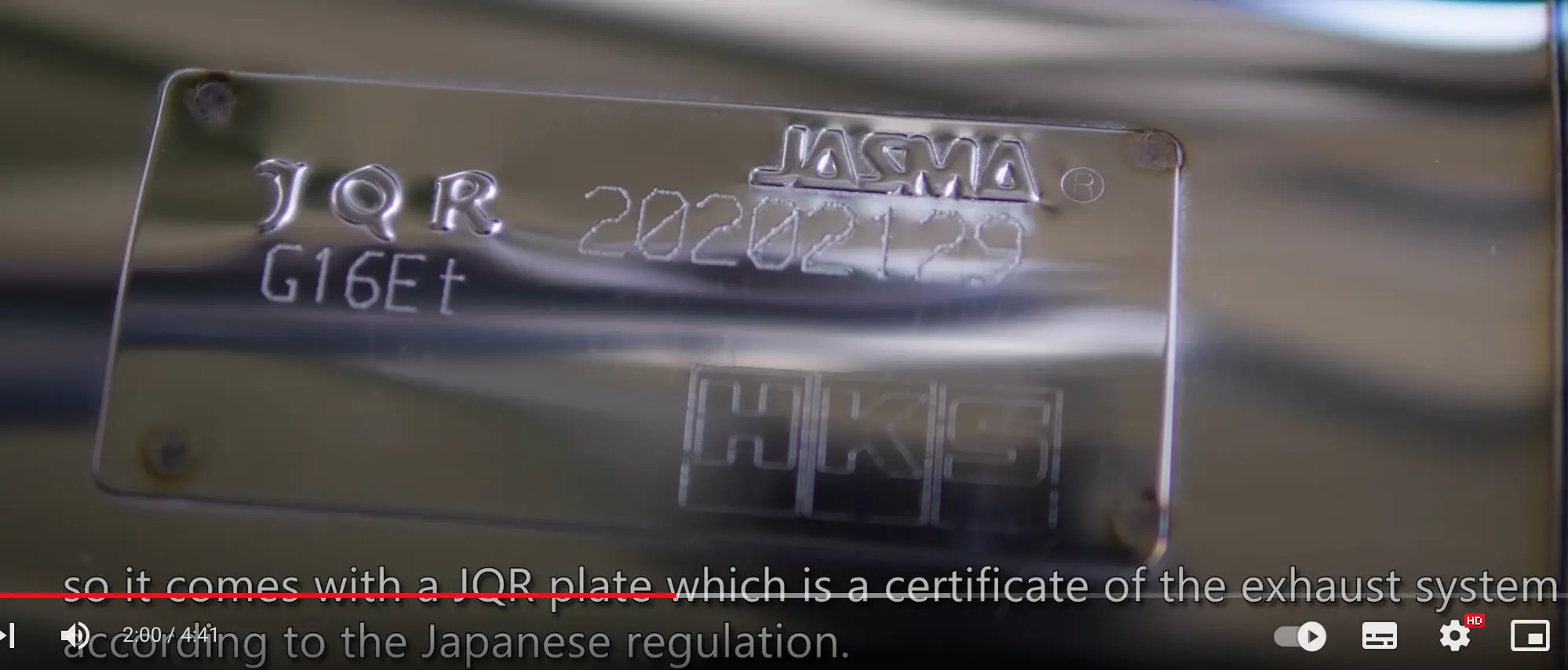
The most reliable way to confirm you have a genuine part is through JASMA plate serial number verification. The identification plate is typically laser-etched or riveted onto the main muffler canister or a prominent pipe section near the rear of the vehicle. If you are struggling to find it, check the underside of the muffler, as it is often placed to remain visible during a standard vehicle lift inspection without requiring the removal of the exhaust system.
1.2.2 Interpreting Manufacturer Codes and Product Identification
Each plate contains a unique alphanumeric string. The code typically identifies the manufacturer, the vehicle model compatibility, and the specific certification batch. By referencing these codes against the manufacturer’s database, you can confirm whether the exhaust was designed for your specific engine platform. These codes are not just branding; they represent a verified engineering standard that links your specific muffler to the certified acoustic performance data submitted during the original approval process.
1.2.3 Identifying Signs of Wear and Authenticity on Physical Plates
Over time, extreme heat and road debris can degrade these tags. Genuine plates are made from durable stainless steel or aluminum, designed to withstand the harsh environment of an under-vehicle exhaust. If you notice signs of tampering, such as filed-down rivets or distorted characters, the exhaust may be counterfeit or modified. A genuine, high-quality exhaust will have a clear, deep-stamped, or etched mark that remains legible despite years of heat cycles.
1.3 Addressing Documentation Myths in the Secondary Market
1.3.1 Why Official Paper Certificates are Rarely Issued to Second Owners
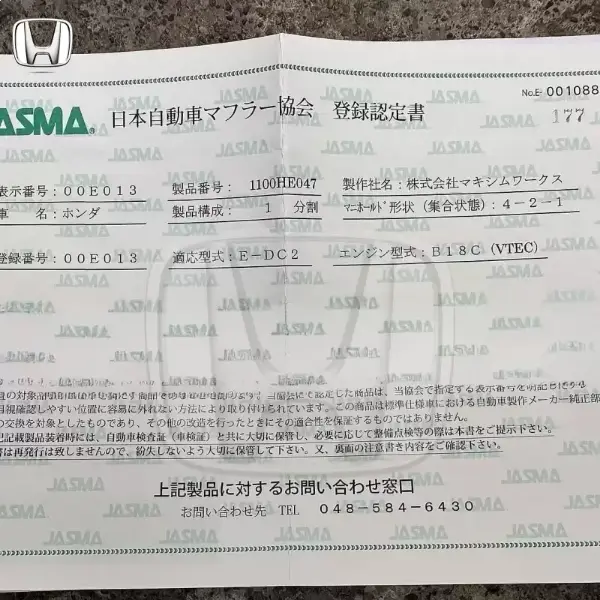
Many buyers mistakenly believe they need an original “paper certificate” to prove legality. In reality, the certification is tied to the stamped plate on the hardware itself, not a piece of paper that can be easily lost or forged. Manufacturers rarely issue replacement paper documents for used units because the physical plate is the legal identifier recognized by authorities and inspection stations.
1.3.2 Methods for Verifying Legitimacy Without Original Paperwork
If you lack documentation, focus on the physical evidence. High-quality welds, internal baffling, and the presence of a clearly legible, factory-stamped serial plate are the most critical indicators of authenticity. Cross-referencing the stamped serial number with official online manufacturer archives is the best method to verify the exhaust’s lineage without needing the original sales receipt or supplemental paperwork.
1.3.3 Handling Faded or Illegible Identification Plates
If your identification plate is damaged, you may face difficulties during a formal vehicle inspection. Do not attempt to re-etch or manipulate the plate yourself, as this can be viewed as an attempt to bypass regulations. Instead, contact the manufacturer directly with photos of your exhaust and the serial number, even if it is partially readable. They may be able to verify your part based on construction details or specific design characteristics unique to their product line.
2. Operational Compliance and Legal Realities for JASMA Systems in the United States
2.1 Balancing JASMA Standards with U.S. Noise Ordinances
For enthusiasts residing in the U.S., it is vital to recognize that a JASMA-certified exhaust system is designed primarily to meet strict Japanese road-legal standards. While these systems are renowned for their high-quality construction and sound-dampening capabilities, they do not automatically grant immunity from local U.S. noise ordinances. Understanding the difference between these regulatory environments is essential for maintaining compliance.
2.1.1 Understanding Street Legality Versus Track-Only Constraints
Most JASMA-certified mufflers are built to operate within a specific decibel range (typically under 96 dB). While this makes them far quieter than “race-only” exhausts, some states or municipalities have stringent laws that supersede international standards. Always verify if your local jurisdiction mandates a specific decibel limit or requires exhaust systems to retain factory-style emission hardware, as JASMA certification focuses on noise, not necessarily local street-legal emission compliance.
2.1.2 The Relationship Between JASMA Certification and State Inspection Requirements
When you head into a state inspection, an inspector is looking for road-worthiness and emission integrity. While having the JASMA plate visible can demonstrate that your exhaust is a legitimate, engineered product rather than a “straight-pipe” modification, it does not bypass mandatory emissions testing. You can learn more about how these parts interact with local laws by reviewing our JASMA legal compliance for modified engines: a guide to ensure your setup passes the scrutiny of your local DMV or testing station.
2.1.3 Impact of Exhaust Modifications on Certification Integrity
The JASMA certification is granted to the exhaust system as it was manufactured and tested. If you modify the muffler by removing baffles, adding resonators, or cutting the piping to adjust fitment, the original certification integrity is compromised. Law enforcement or inspectors may void any claim to the system’s “certified” status if it shows clear signs of aftermarket tampering or material alteration.
2.2 Maintaining Compliance and Performance
To keep your vehicle street-legal and quiet, you must treat your exhaust as a precision component. Over time, heat and vibration can degrade internal sound-absorbing materials like glass wool. As these materials break down, the exhaust tone may deepen or increase in volume, potentially pushing your vehicle beyond local legal decibel thresholds. Regularly inspecting the mounting points and ensuring the internal packing remains intact is crucial for longevity. If you notice a drastic change in sound, it may be time to have the muffler professionally inspected to ensure it still meets the acoustic performance standards it was originally built for.
2.3 Navigating Regulatory Friction During Traffic Stops or Inspections
If you are stopped by law enforcement, transparency is your best asset. Having documentation, such as the original manufacturer’s pamphlet or a clear, legible photograph of the JASMA serial plate, can help clarify that the system is an engineered, street-compliant part rather than an illegally modified exhaust.
2.3.1 Communicating JASMA Certification to Law Enforcement
Keep the conversation focused on the engineering. Explain that the JASMA plate confirms the system was designed to meet strict noise abatement standards. Officers are generally more receptive to technical evidence of compliance than to arguments about vehicle modifications.
2.3.2 Preparing Documentation for Performance-Oriented Exhaust Systems
Carry a digital or physical folder containing your JASMA plate verification and any supporting paperwork from the manufacturer. This demonstrates that you are a responsible enthusiast who prioritizes vehicle health and legal compliance.
2.3.3 Distinguishing Between Noise Compliance and Emissions Violations
Always remember that noise ordinances and emissions laws are distinct. A JASMA exhaust might pass a sound check with ease but could still fail an inspection if it removes a catalytic converter. Ensure your setup includes all required emissions hardware to avoid confusion during technical reviews.
Navigating the JASMA exhaust certification documentation process requires a clear understanding of the balance between Japanese automotive standards and local U.S. requirements. By prioritizing the verification of your exhaust’s serial number and understanding the reality of secondary market documentation, you can confidently manage your vehicle’s compliance. Remember that while a JASMA plate acts as a benchmark for quality and noise attenuation, it is your responsibility to ensure your vehicle remains compliant with local noise ordinances and inspection protocols during daily use.
For those looking to ensure their system remains within legal parameters, maintaining the integrity of your exhaust through regular inspections is just as vital as the initial certification. You can learn more about how these standards influence your vehicle’s long-term legality by reviewing our guide on JASMA exhaust sound level legal limits and certification. Whether you are addressing a faded identification plate or preparing for a state inspection, patience and thorough documentation are your best tools. By staying informed and proactive, you can enjoy the performance benefits of a high-quality aftermarket exhaust while upholding the standards that keep our roads safe and compliant.