
For enthusiasts of Japanese Domestic Market (JDM) vehicles, upgrading to a high-performance exhaust system is often the first step in unlocking a car’s true potential. However, when navigating the complexities of importing these vehicles into the United States, understanding JASMA regulatory compliance for imported vehicles becomes a critical hurdle. Many owners mistakenly assume that the presence of a Japanese Automotive Sports Muffler Association (JASMA) stamp guarantees legal standing on American roads. While these components are held to rigorous quality and sound benchmarks in Japan, they do not automatically satisfy the diverse and stringent requirements set by U.S. federal and state authorities.
This guide clarifies how these Japanese standards interact with U.S. law, helping you distinguish between certification and federal compliance. You will learn how to verify the authenticity of your exhaust hardware, bridge the gap between JASMA acoustic standards and local noise ordinances, and prepare your vehicle for the often-challenging process of passing official DMV inspections and emissions testing. By understanding the distinction between domestic performance standards and international import requirements, you can ensure your build remains both powerful and road-legal.
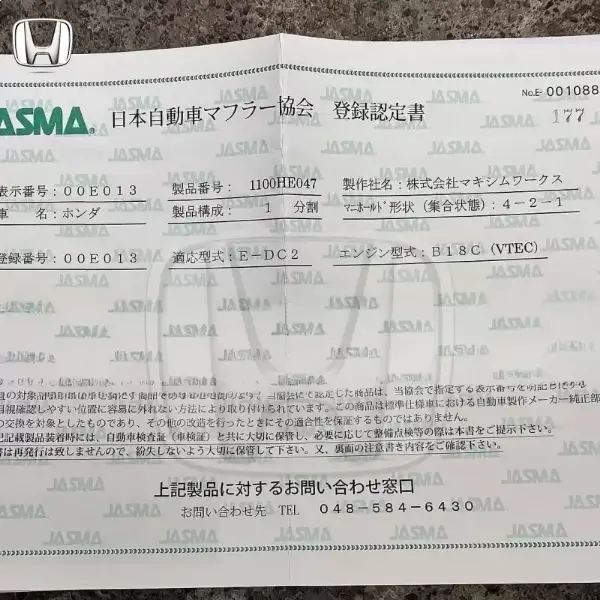
1. Navigating JASMA Regulatory Compliance for Imported Vehicles and Federal Standards
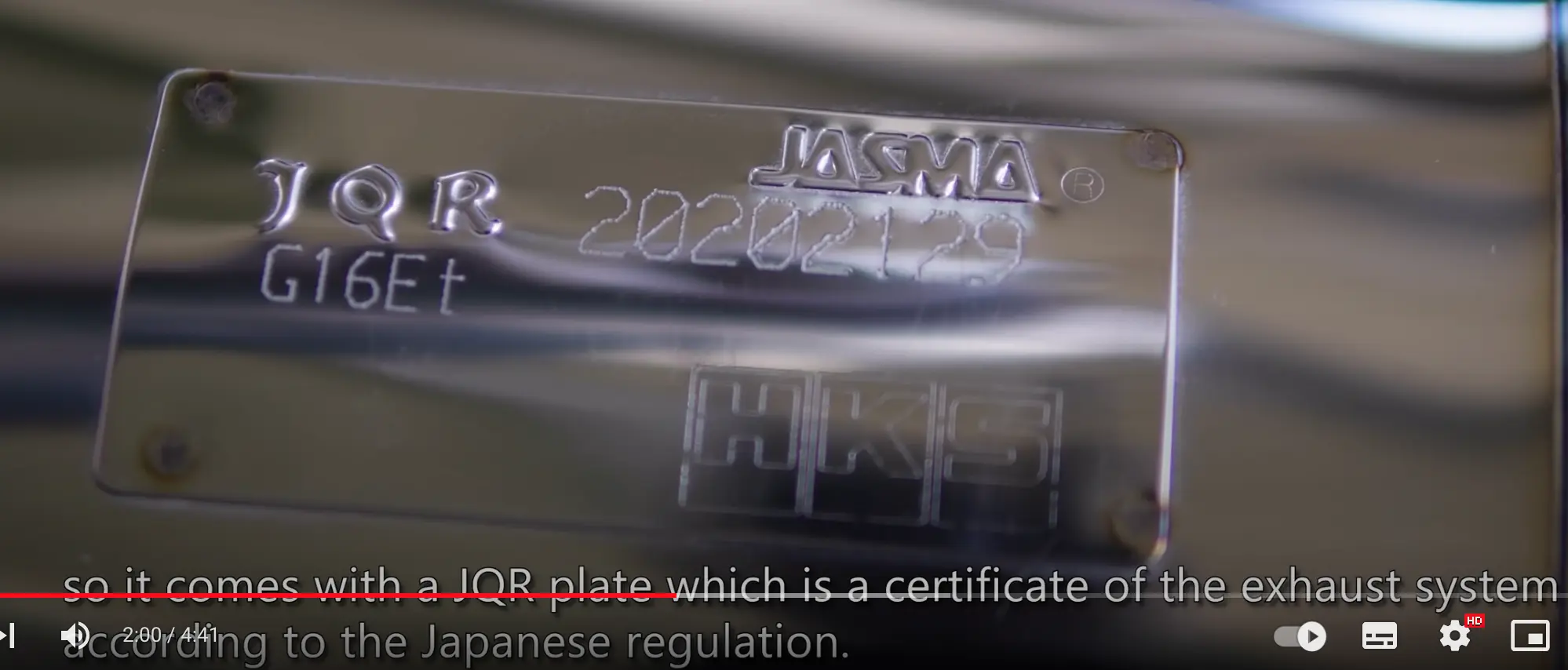
1.1 Decoding the Role of JASMA in the Japanese Automotive Aftermarket
1.1.1 Understanding the voluntary nature of JASMA versus government homologation
The Japan Automotive Sports Muffler Association (JASMA) plays a pivotal role in the Japanese tuning scene, but it is important to clarify its function. Unlike government-mandated safety or emissions homologation, JASMA certification is a voluntary industry standard. It was established to provide a benchmark for aftermarket exhaust systems, ensuring they meet specific noise level requirements to curb excessive exhaust sound pollution in urban Japanese environments. While not a law by the Japanese government, the JASMA certification mark represents a commitment to quality and acoustic control that manufacturers adhere to voluntarily to maintain market credibility.
1.1.2 Distinguishing between street-legal JASMA components and dedicated track-only parts
For importers and enthusiasts, distinguishing between JASMA-certified products and track-only hardware is essential for long-term ownership. JASMA-certified exhaust systems are designed for street use, meaning they have passed rigorous bench testing to ensure they remain within established decibel limits under various engine loads. In contrast, track-only or competition-spec parts are engineered exclusively for circuit performance, often sacrificing noise suppression for maximum exhaust gas velocity. These competition parts lack the certification tag and generally do not comply with street-legal noise requirements, which can complicate vehicle inspections significantly.
1.1.3 How to verify serial numbers and locate official certification plates on JDM exhaust systems
When evaluating a potential import, identifying the physical certification plate is your first step toward verifying the hardware. These plates are typically riveted to the muffler canister or the piping section near the resonator. Each plate contains a unique serial number that corresponds to the specific exhaust model and its approved vehicle application. You can utilize resources like our JASMA Plate Serial Number Verification: A Complete Guide to cross-reference these markings. A genuine plate is a strong indicator that the system has been tested to meet established acoustic standards, rather than being a low-quality replica or an unverified custom fabrication.
1.2 Bridging the Gap Between Japanese Exhaust Standards and U.S. Regulations
1.2.1 Why JASMA certification does not equate to EPA or DOT import compliance
A common misconception among JDM enthusiasts is that a JASMA badge implies legal compliance in the United States. This is not the case. JASMA standards focus on sound pressure levels; they do not certify that an exhaust system meets the Environmental Protection Agency (EPA) or Department of Transportation (DOT) requirements for emissions or structural safety. An exhaust system can be perfectly silent and well-built by JASMA standards, yet still potentially violate federal laws if it replaces a catalytic converter or alters the factory emissions control system of a vehicle not yet exempt from U.S. standards.
1.2.2 Comparing JASMA decibel limits with localized U.S. state noise ordinances
While JASMA sets a baseline for reasonable noise levels, U.S. states often have specific, localized ordinances regarding aftermarket modifications. Some states utilize a simple “plainly audible” standard, while others enforce strict decibel limits measured at a specific distance from the exhaust exit. Because JASMA testing protocols and U.S. sound measurement methodologies differ, a system that complies in Japan may still be subject to local noise citations. It is vital to research your state’s specific vehicle code to understand how your aftermarket exhaust interacts with local enforcement.
1.2.3 Risks associated with importing aftermarket modifications that bypass federal emission requirements
Importing a vehicle equipped with an aftermarket exhaust that removes or replaces the factory emissions equipment poses a significant risk. Federal law strictly prohibits tampering with emission control systems, including the removal of catalytic converters or the installation of headers that alter air-fuel mixture feedback loops. Using parts that bypass these federal requirements can lead to impoundment, fines, or the denial of vehicle registration at the DMV, regardless of whether the part is otherwise “street legal” in its country of origin.
1.2.4 Addressing the unique challenges of California Air Resources Board requirements for JDM imports
California presents the most stringent regulatory environment for JDM imports. The California Air Resources Board (CARB) requires that any aftermarket exhaust system installed on a motor vehicle must be certified to comply with specific emissions standards, often requiring an Executive Order (EO) number. Because JASMA-certified parts are intended for the Japanese market, they rarely possess a CARB EO number. For California residents, ensuring JASMA regulatory compliance for imported vehicles often means keeping the stock emissions hardware intact or sourcing components that have specifically undergone the CARB certification process.
2. Managing Legal and Operational Compliance During and After Vehicle Importation
2.1 Best Practices for Pre-Import Assessment and Customs Documentation
Successfully navigating the import process requires proactive planning, particularly when managing aftermarket modifications. Before your vehicle leaves Japan, perform a comprehensive audit of the entire exhaust system. Confirm that all components, including catalytic converters and mufflers, are clearly marked and well-documented. Using a JASMA exhaust identification tag decoding guide can help you confirm the authenticity of your hardware before it hits U.S. soil.
2.1.1 Pre-shipment checklist for auditing vehicle modifications and exhaust systems
Document every modification with clear photography. Verify that the JASMA certification plate is legible, securely attached, and matches the vehicle’s specific model year and chassis code to avoid scrutiny at the port of entry.
2.1.2 The critical role of Registered Importers in navigating EPA and DOT exhaust mandates
A Registered Importer (RI) is your best defense against federal non-compliance. These professionals understand the specific intersection of JASMA standard compliance vs vehicle inspection requirements and can advise on whether your JDM exhaust will meet localized environmental standards.
2.1.3 Strategic decision-making for non-compliant systems: Restoration, replacement, or modification
If your vehicle features a track-only or non-compliant exhaust, the most cost-effective path is often swapping it for a street-legal system before shipping. Modifying an existing system to meet standards is rarely successful due to the structural complexity of certified performance parts.
2.1.4 Organizing essential paperwork for Customs and Border Protection and local DMV inspections
Keep a dedicated file containing all original JASMA certificates, bill of sale documentation, and proof of shipping. Having these items organized demonstrates your commitment to transparency during the stringent EPA and DOT import declaration process.
2.2 Long-Term Maintenance and Post-Importation Regulatory Hurdles
Importing the vehicle is only the first step. Once the car is registered, you must ensure that your exhaust system continues to operate within legal parameters throughout its service life.
2.2.1 Maintaining JASMA-certified systems to ensure ongoing compliance with noise ordinances
Regular inspections are essential. Over time, internal packing materials within a muffler can degrade, causing the sound profile to shift. If the system exceeds local noise ordinances, you may face fines or fail required state inspections.
2.2.2 Understanding how thermal degradation and material wear impact exhaust sound levels
Thermal cycling takes a toll on metal and internal baffles. Monitoring the system for leaks and structural fatigue is vital, as exhaust leaks can drastically alter decibel readings and trigger emissions warnings.
2.2.3 Navigating annual state emissions testing with high-performance aftermarket hardware
Be aware that high-flow performance parts may change your vehicle’s emission output. In states with strict testing, you should be prepared to provide documentation that your hardware remains within permissible limits.
2.2.4 Managing potential legal issues arising from counterfeit or replica exhaust parts
Never assume an exhaust is genuine based on visual appearance alone. Counterfeit parts often lack the acoustic tuning and internal engineering required to pass legal standards, potentially leading to vehicle impoundment or mandatory replacement orders from authorities.
Successfully navigating JASMA regulatory compliance for imported vehicles is a significant commitment that extends well beyond the initial purchase of high-performance parts. While a genuine JASMA-certified exhaust system represents a gold standard in Japanese automotive engineering—balancing performance gains with acoustic refinement—it is essential to remember that this certification does not automatically grant immunity from U.S. federal or state regulations. Prioritizing the authenticity of your hardware, ensuring your serial numbers are documented, and maintaining a proactive approach toward emissions and noise standards will save you from potential legal headaches and failed inspections down the road.
Ultimately, the key to a smooth ownership experience lies in due diligence. Always verify your hardware against the JASMA plate serial number verification process to ensure your vehicle remains legal and roadworthy. By treating your exhaust system as a long-term component that requires periodic maintenance rather than a “set it and forget it” modification, you protect the value of your import and honor the craftsmanship of the original design. Stay informed on shifting local ordinances, keep your documentation organized, and you will be well-equipped to enjoy your JDM import while maintaining full regulatory compliance on American roads.